






Creating your own ceramics studio is an important step. Whether you want to practice pottery at home, develop your business, or set up a full-fledged professional studio, the choice of equipment should be carefully considered based on your practice, your space, and your needs.
Pottery wheel, ceramic kiln, tools, furniture, clays, glazes… It can be difficult to know where to start and which equipment is truly essential. The goal is not necessarily to buy everything immediately, but to gradually build a functional workspace that is suited to your way of working with ceramics.
In this guide, we will help you through the different steps to equip your ceramics studio.
Before getting equipped: clearly define your project
Before choosing your equipment, take the time to think about how you want to use your studio. A space dedicated mainly to hand-building will obviously not require the same equipment as a professional studio regularly producing wheel-thrown pieces.
The first question therefore concerns your practice: do you want to mainly throw, hand-build, sculpt, decorate, or combine several techniques? The frequency of use is also important. An occasional ceramicist will not necessarily need the same production capacity as a professional who performs several firings each week.
You must also take into account the available space. Even a small studio can be perfectly functional as long as the different areas are well organized: clay preparation, shaping, throwing, decorating, drying, storage, and firing.
Finally, if you are considering installing a kiln, certain technical constraints must be studied from the beginning of the project, notably the available electrical supply, the location of the kiln, and the conditions necessary for its use.
The pottery wheel: how to choose it properly?
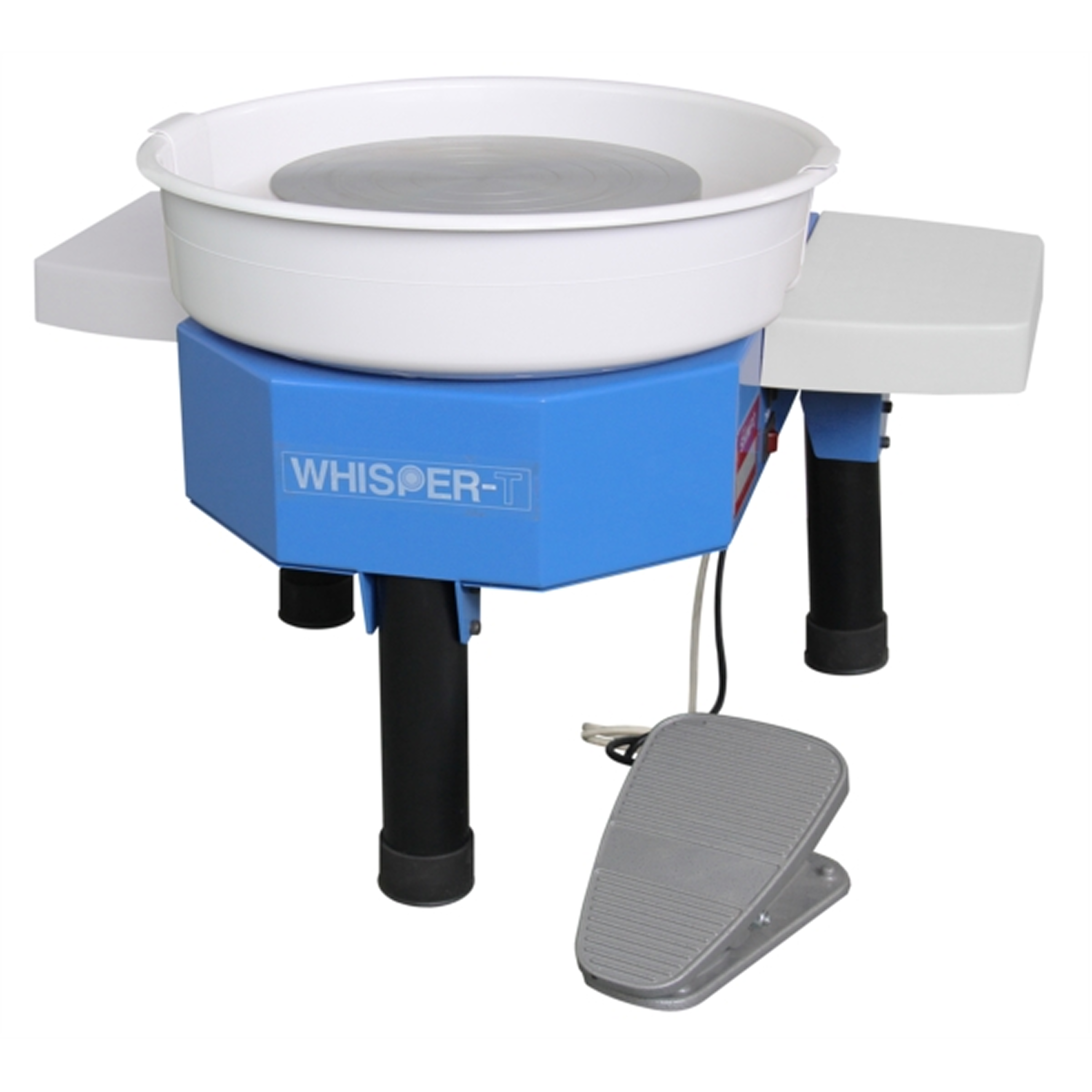
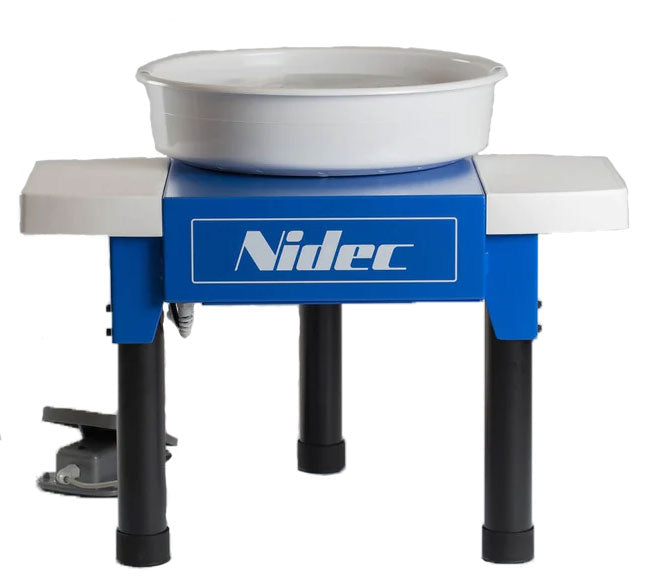
For those who want to practice throwing, the pottery wheel quickly becomes one of the central pieces of equipment in the studio.
However, not all wheels meet the same needs. The choice depends notably on the amount of clay you want to work with, your frequency of use, and the level of comfort you are looking for.
The power and especially the torque of the motor are important elements, particularly when you want to throw large pieces. The diameter of the throwing wheel, the drive system, the noise level, the direction of rotation, and the precision of the pedal are also to be taken into account.
For regular use, comfort also deserves special attention. A suitable working position and a good stool allow you to work more comfortably during long throwing sessions.
At Ceradel, you can find different pottery wheels and accessories, notably models from the brands Shimpo, Brent, and BTH, so you can choose equipment that matches your level and use.
The ceramic kiln: an investment to prepare carefully
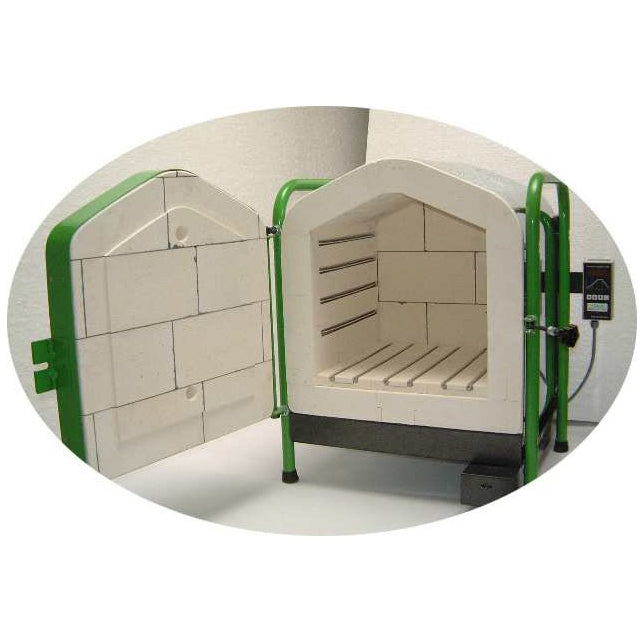
The ceramic kiln often represents the most important investment when creating a studio. It therefore deserves special consideration.
The first step is to determine the capacity you need. A compact kiln can be perfectly suited for small production or a personal studio, while a larger volume quickly becomes attractive when firings are frequent or when you make large pieces.
You must also consider the temperatures you want to reach. Earthenware, stoneware, or porcelain are not necessarily fired at the same temperatures. Your kiln must therefore be compatible with the clays and glazes you want to use.
The available electrical supply in your studio is also decisive. Depending on their power, some kilns can operate on a single-phase installation while others require a three-phase supply. It is therefore essential to check the technical characteristics of the model as well as the compatibility of your installation before purchase.
The loading method is another selection criterion. Vertical kilns, loaded from the top, are very common in ceramics studios and allow you to optimize the available space. Front-loading kilns, on the other hand, offer direct access to the firing chamber and can provide greater comfort during loading and unloading operations.
For specific practices, there are also Raku and gas kilns, fusing kilns, bell kilns , or even equipment intended for professional and industrial uses.
Ceradel offers different solutions from specialized manufacturers such as Nabertherm, Rohde, Kittec, and Cesame. The choice depends above all on your production, your space, and your technical constraints.
Also think about loading equipment
Buying a kiln is not enough: you must also be able to organize the pieces properly inside.
Kiln shelves allow you to create different levels in the kiln while posts and other supports are used to adjust their height according to the pieces to be fired. The combination of several dimensions allows you to gradually optimize the kiln loading.
It is also advisable to protect the shelves to limit damage in the event of glaze drips during firing. Good loading equipment thus helps to facilitate firings while preserving your equipment.
Setting up a functional workspace
A pleasant studio does not depend solely on the quality of its machines. Its organization plays an equally important role.
A sufficiently sturdy work surface allows you to prepare the clay, do hand-building, or perform different finishing operations. Nearby, plan easily accessible storage spaces for the tools you use daily.
The storage of pieces also deserves to be anticipated. A ceramic piece goes through many steps before being finished and sometimes needs to dry slowly for several days. Shelves allow you to organize freshly made pieces, those waiting for a first firing, bisque pieces to decorate, and finished pieces.
When production increases, additional equipment can also make the work easier. A slab roller, for example, allows you to obtain uniform clay slabs for slab work. A extruder, on the other hand, can make the preparation and recycling of larger quantities of clay easier according to the studio's needs.
These machines are not necessarily essential to start, but can represent a considerable time saving in a regularly used studio.
Essential tools in a ceramics studio
There is a very wide variety of tools for pottery and ceramics. Once again, there is no need to want to own everything immediately.
A few well-chosen tools already allow you to perform a wide variety of work. Ribs and trimming tools are used to remove material and work shapes, while modeling tools allow you to smooth, compress, or shape surfaces. Ribs are particularly versatile for hand-building and sculpting.
To this can be added cutting wires, sponges, needles, measuring tools, knives, and different accessories intended for throwing or shaping.
With experience, you can gradually complete your equipment with more specialized tools. Brands like Xiem Tools, Mudtools, or Diamondcore offer, for example, many tools intended for shaping, finishing, and decorating pieces.
Developing the decoration of your pieces
Decoration is a particularly vast universe in ceramics. There are many tools allowing you to work directly on the surface of the clay even before moving on to slips or glazes.
Decorative rollers, texturing tools, stamps, or sculpting tools allow you to create patterns and reliefs directly in the clay. It is also possible to work by incision, engraving, or adding material.
Gradually building a selection of decorating tools allows you to experiment and develop your own universe without necessarily investing in a lot of equipment from the start.
Choosing your clays according to your practice
Clay is obviously at the heart of the studio. Its choice depends as much on your technique as on the desired aesthetic result.
Earthenware is generally used for lower temperature firings while stoneware is designed for higher temperatures. Porcelain, on the other hand, has particular characteristics, notably a great fineness and a whiteness sought after after firing.
Beyond the clay family, texture also plays an important role. A very smooth clay can be particularly pleasant for throwing while a grogged clay can provide more support for certain modeled or sculpted pieces.
Before buying large quantities, it can be interesting to test several clays and ceramic clays to find those that best match your practice and your kiln.
Glazes, slips, and underglazes: building your decorating space
Once the first pieces are made and fired, comes the time for color and finishing.
Ceramic glazes allow you to obtain a very wide variety of surfaces: glossy, matte, satin, transparent, opaque, textured, or even reactive. Their result depends on many parameters such as the clay used, the thickness of application, and the firing temperature.
Slips and underglazes offer other possibilities and allow you notably to work color and patterns differently.
Manufacturers like Amaco, Mayco, Botz, or Spectrum offer today very numerous references allowing both to discover glazing and to develop more advanced research around colors and effects.
The essential point remains the compatibility between your clay, your decorating product, and your firing temperature. It is therefore important to always check the manufacturer's recommendations.
Do not neglect safety in your studio
The creation of a ceramics studio also implies thinking about the right working conditions.
The dust generated by dry clays must notably be limited as much as possible. It is preferable to clean surfaces regularly with wet methods rather than sweeping up dry dust.
Raw materials, glazes, and other products must also be properly identified and stored.
Finally, special attention must be paid to the firing area. The kiln must be installed in a suitable environment respecting the manufacturer's recommendations, safety distances, and the electrical and ventilation requirements applicable to the installation.
What budget to plan for equipping your ceramics studio?
There is really no universal budget for creating a ceramics studio. Everything depends on your practice and especially the level of autonomy you are looking for.
To start, it is completely possible to begin with a workspace, a few tools, clay, and decorating equipment. Firings can then be entrusted to an outside studio.
If you want to practice throwing regularly, the purchase of a wheel quickly becomes relevant. The investment in a kiln then allows you to become much more autonomous in the entire manufacturing process.
In a professional studio, other equipment like a slab roller or extruder can gradually complete the installation.
The goal is therefore less to immediately own all the equipment than to build a studio consistent with your practice and to make it evolve over time with your needs.
Get guidance to equip your ceramics studio
Choosing your first wheel, determining the appropriate kiln volume, checking electrical constraints, selecting your loading equipment, or organizing a complete studio can quickly raise many questions.
And that is normal: there is no ideal ceramics studio, but equipment suited to each project.
At Ceradel, our ceramicists can accompany you in your project and advise you in the choice of your equipment based on your practice, your space, your production, and your budget.
Tell us about your project using our "I'm equipping my studio" form. We can then get back to you to discuss your needs and guide you toward the most suitable solutions.