




Raku is a spectacular ceramic firing technique that is increasingly attracting artisans, artists, and pottery enthusiasts. Halfway between Japanese tradition and contemporary experimentation, raku offers unique creative freedom and results that are impossible to reproduce identically.
In this article, discover everything you need to know to practice raku: its origin, technique, essential equipment, practical advice, and resources for improvement.
Origin of Raku: An Ancestral Japanese Tradition
Raku originated in Japan in the 16th century, as part of the tea ceremony. Developed under the impetus of tea master Sen no Rikyū, this technique favors simplicity, irregularity, and the beauty of imperfection.
Originally, raku bowls were hand-formed and quickly fired, then removed from the still-hot kiln. This artisanal approach gave rise to a unique aesthetic, deeply linked to the wabi-sabi philosophy, which values the ephemeral and the imperfect.
Today, raku has spread widely in the West, where it has become an artistic technique in its own right.
What is Raku Firing?
Raku firing differs from classic ceramic firings in several key elements:
• Rapid temperature increase
• Firing around 900 to 1000°C
• Removal from the kiln while hot (creating thermal shock)
• A smoking phase (reduction)
When the incandescent piece is plunged into combustible material, creating thermal shock, oxygen becomes scarce during smoking, leading to carbonization of the clay.
Result:
• Black crackle
• Metallic effects
• Intense contrasts
• Smoking / carbonization of the clay.
Each firing is unique, which is all part of raku’s charm.
Why Practice Raku?
The success of raku is based on several major advantages:
Unlimited Creativity
Raku allows for the exploration of visual effects impossible to achieve with other techniques.
A Spectacular Experience
Removing from the kiln and smoking are impressive moments, highly appreciated in workshops.
A Fast Process
Unlike traditional firings, a raku firing can be completed in just a few hours.
An Experimental Approach
Raku encourages constant testing, observation, and learning.
Equipment Needed to Practice Raku
Practicing raku requires specific equipment. Investing in appropriate materials is essential for achieving good results while ensuring your safety.
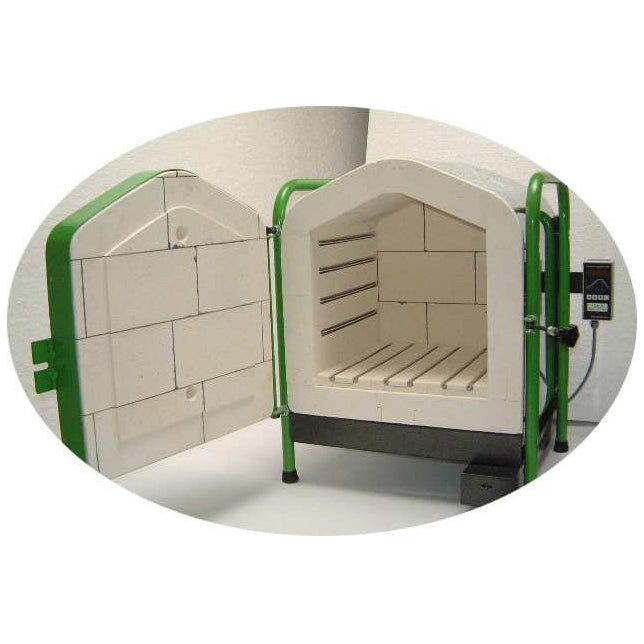
A raku kiln is generally a gas kiln, designed for:
• Rapid temperature increase
• Easy opening during firing
• Resistance to thermal shock
There are fixed or portable models, suitable for workshops as well as demonstrations.
Handling Tools
Handling hot pieces is a critical step:
• Long metal tongs: for gripping pieces at high temperatures
• Thermal gloves: essential for protecting your hands
• Safety glasses: recommended against splashes
Smoking Equipment
Smoking is at the heart of the raku process:
• Metal bin with lid (e.g., trash can)
• Sawdust
• Newspaper
• Wood chips or leaves
These materials help create a reduction atmosphere.
Ceramic Materials
The choice of materials is crucial:
• Grogged clay: it is more resistant to thermal shock
• Raku glazes: specially formulated to produce specific effects
💡 Tip: testing different glazes helps you better understand their reactions.
Detailed Steps for Raku Firing
1. Shaping
Pieces are modeled or thrown, taking thermal constraints into account.
2. Drying
Complete drying is essential to prevent cracks.
3. Bisque Firing
First firing around 980°C to solidify the piece.
4. Glazing
Application of specific raku glazes.
5. Raku Firing
Rapid temperature increase in the kiln. Opening the kiln between 900°C and 1000°C to create thermal shock. Thermal shock creates crackle on the glaze surface.
6. Smoking
Placing the hot piece in combustible material.
7. Cooling
Cooling in air or water depending on the desired effects.
8. Cleaning
Removal of soot residue to reveal the effects.
Tips for Successful First Raku Firings
Starting raku can be intimidating. Here are some tips for rapid progress:
• Start with simple shapes
• Test a limited number of glazes
• Record your parameters (temperature, time, materials)
• Work in a safe environment
• Be patient: raku requires experimentation
Raku Safety: An Essential Point
Raku involves high temperatures and flames. It is essential to follow certain rules:
• Always practice outdoors or in a ventilated area
• Wear appropriate protective equipment
• Avoid synthetic clothing
• Have a fire extinguisher or water source available
• Never practice alone as a beginner
Improve Your Skills with Specialized Books
To further master raku, specialized books are a valuable resource. On your Ceradel shop, you offer two essential references:
• Rakuvaria 2: a guide rich in experiments, perfect for deepening your understanding and discovering new approaches.
• Rakuvaria 3: intended for ceramists wishing to delve deeper into creativity and technical mastery.
These books help you better understand glaze reactions, explore advanced techniques, and draw inspiration from numerous examples.
Raku Today: Between Art and Experimentation
Today, raku is widely used in contemporary ceramics. It is particularly appreciated for:
• Decorative pieces
• Sculptures
• Unique artistic objects
However, due to their porosity, raku pieces are not suitable for food use.
Conclusion: Why Start with Raku?
Raku is a fascinating technique that combines craftsmanship, experimentation, and emotion. Accessible yet demanding, it allows for the development of a unique artistic approach to ceramics.
With the right equipment, practice, and suitable resources, you can quickly progress and create original pieces.
To deepen your practice, consider consulting the specialized books available on your shop, true sources of inspiration for all raku enthusiasts.